
Moving Countdown: Plan Your Move from 90 Days Out to After the Move
Moving is one of the most stressful things a household does, and it isn't only the heavy lifting. It's the disruption - a new neighborhood, a new routine, a new everything - and that change is hard on everyone, kids and partners included. The boxes are the easy part to see. The strain on the family is the part that catches people off guard.

Here's what twenty years of helping people move has taught us: most of that stress doesn't come from a lack of effort. It comes down to planning ahead. The people who find moving manageable made a handful of smart decisions early. The people who find it miserable started late, booked in a panic, and ended up hauling things they never wanted in the first place.
We're a local company, and we'll be straight with you about every way of moving - the ways we handle and the ways we don't. Where the job isn't ours, we'll tell you plainly so you can line up the right help yourself. No sales pitch dressed up as advice.
Two pieces of that advice are worth more than all the rest. First, start planning earlier than anyone tells you to - the best moves begin while there's still time to make calm decisions, not rushed ones. Second, declutter early, or you'll pay to move it - the cost of a move is driven by how much you move, and your quote is a snapshot of whatever's in your home the day it's measured. Clear out before you get that quote, or you'll pay to move, and then keep, the things you'd have been glad to let go. When you're ready to put numbers to your move, our Moving Calculator estimates the cost.
This page lays the whole move out in four simple phases - ninety, sixty, thirty, and seven days out - plus the day itself and what comes after. Start wherever your calendar puts you, and work forward.
The Lead-Up: Four Phases
Every good move runs on the same runway: a series of decisions and steps spaced out over the weeks before the truck or container arrives. Here are the four lead-up phases. Each links to its own printable checklist you can work through at your own pace.


When It Comes to Moving, You Have Options
Before you can plan the timeline, it helps to know how you're moving - because the way you move changes what each phase looks like. There are three honest options, and the right one is less about price than about capacity: how much time, energy, and help you actually have. We can handle all three - the middle one ourselves, the others through us or alongside us - and we'll be honest about which fits.
Do It Yourself
The most hands-on option: you rent a truck, gather your own help, and do the loading, the driving, and the unloading. It's the lowest sticker price and the most work - you handle everything twice, once at each end, with an unfamiliar truck in between. Doing it yourself suits a smaller move, a flexible schedule, and willing hands. It's a real option, and for some moves it's the right one - we'll say so when it is.
One thing to plan for: if your dates don't line up, a do-it-yourself move can force you into a last-minute storage unit - and a second round of loading and unloading you didn't budget for. That gap is exactly what the next option is built to handle.
Moving Container - And the Storage That Comes With It
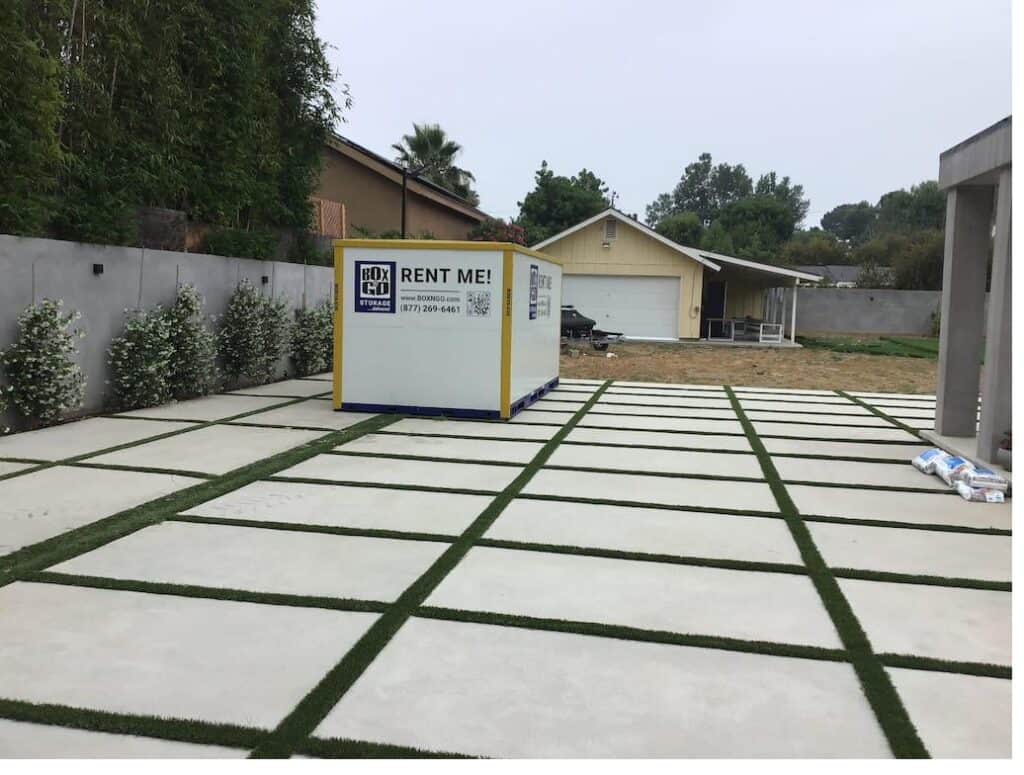
The middle path, and the one we provide ourselves. We deliver a moving container to your home, you pack and load it at your own pace, and we pick it up and bring it to your destination - locally or long-distance - then redeliver when you're ready. There's no truck to rent and no loading dock to fight, and you load once instead of twice. Placing one needs only about 8.5 feet of width and 8.5 feet of overhead clearance - far less room than the big container services need - so it fits driveways, gates, and tight spots.
 We Deliver
 We Pick Up
 We Store/Move
Store on your driveway or inside our secure facility. Load/unload only once. Ground level access.
The real advantage is what happens between homes. Moves rarely run on a clean schedule. Closing slips, escrow drags, the new place isn't ready, a lease ends before the next one begins. In a do-it-yourself or van-line move, that gap turns into an expensive, unplanned scramble - an emergency storage unit, plus paying to load and unload everything an extra time. With us, storage isn't a separate emergency; it's already part of the move. Your loaded moving container simply stays in our facility, and we redeliver it the day your new place is ready. No second move, no panic unit, no surprise bill. Our moving containers are breathable and climate-friendly, so your belongings wait comfortably until you are.
What you load depends on the move. A self-move - where you load the moving container and we transport it - uses our modular Flex containers, about 8 feet by 5 feet each: order one or several, and pay for the ones you load. For a local move, larger sizes can be used as well, up to about 16 feet by 8 feet. Sizing can be confusing, so you don't have to guess - tell us what you're moving and we'll point you to the right size and count, or use the Moving Calculator below. Compared with renting a truck or hiring full-service movers, the container path lets you load once, on your own schedule, and folds the in-between storage into one plan instead of two.
Full Service - Through Our Partner Network
The hands-off option: a truck and a professional crew handle the whole move - packing, loading, driving, and unloading - so your job shrinks to the decisions and the prep. This is something we arrange for you through our network of licensed moving partners, local and long-distance. You don't go hunting for a mover; tell us what you need and we coordinate it.
This works especially well when you're already storing with us. Say your belongings are in our facility and you decide you'd rather not move them yourself - we can get you a quote through our partner network and arrange the move from there, or you can come to our facility and collect your things. The storage and the move stay under one roof instead of becoming two separate problems.
Full service suits a tight schedule, a larger home, or anyone who'd rather spend moving week with their family than with boxes. When you're ready to compare what each option costs, our Moving Calculator gives you an estimate for a full-service local or long-distance move, or a self-move.
Then Comes the Move Itself
Those four phases are the runway - the decisions and the packing that make the last day calm instead of frantic. Once you know how you're moving, there's one phase left: the move itself, and the days right after. It's its own checklist, because how the day goes depends on the path you chose - loading a container, meeting a crew, or driving a truck yourself - and because the move isn't finished when the last box is in. Arrival, inspecting, unpacking in a sensible order, and closing out the place you left are all part of landing well.

A Note on the Things We Don't Do
Part of being a straight guide is telling you where to look when a piece of the job isn't ours.
Vehicles. We don't transport cars. If you're driving yours, plan it into your timeline; if it needs to be shipped, that's something you'd arrange yourself with an auto-transport company.
Fine art and antiques. Everyday framed pieces pack like any other fragile item and travel in your moving container. Genuinely high-value or irreplaceable art is best handled by a specialized fine-art shipper - custom crating, climate control in transit, dedicated art insurance - which is something you'd arrange directly with that specialist.
Pianos and pool tables. We move standard upright pianos and pool tables locally with the rest of your load, and arrange a specialized service for baby grands and other large or heavy pieces. Just flag them when you get your quote.
Frequently Asked Questions
When should I start planning a move?
Earlier than most people think - a local move benefits from a month or more of lead time, and a long-distance move from closer to two or three months. The earlier you start, the more of your decisions you get to make calmly instead of under pressure. The four phases on this page are built to start at ninety days and work forward; pick up wherever your calendar is.
What's the difference between doing it myself, a container, and full service?
Doing it yourself means renting a truck and handling the loading, driving, and unloading on your own. A container means we deliver a moving container, you load it at your own pace, and we handle the pickup, transport, and delivery - locally or long-distance - with storage between homes built right in. Full service means a truck and crew handle the whole move, which we arrange for you through our partner network. The best fit depends less on price than on how much time and help you have. The Moving Calculator can put estimated numbers to each.
What happens if my new place isn't ready when I move out?
This is one of the most common snags in a move, and it's where the container option earns its keep. Your loaded moving container stays in our facility, and we redeliver it when your new home is ready - no emergency storage unit, no extra round of loading and unloading. With a do-it-yourself or van-line move, that same gap usually means scrambling for storage and paying to handle everything an extra time.
Do you handle long-distance moves?
Yes - both ways. You can load a moving container and we'll transport it long-distance, or we can arrange a full-service long-distance move through our partner network. Because we're a local company first, we'll give you straight guidance on which makes more sense for your distance and budget.
Can you help if my things are already in storage with you?
Yes. If you're storing with us and decide you want them moved, we can get you a quote through our partner network and coordinate the move, or you can come to our facility and collect your belongings. Storage and the move stay in one place.
How can I lower the cost of my move?
Move less. The cost tracks how much you move, so the single most effective step is to declutter before you get a quote - sell, donate, or discard what you won't want at the other end, including heavy or dated furniture that can cost more to move than to replace. Decluttering after the quote means you've already paid to move it.
What about pianos, fine art, or my car?
We move standard pianos and pool tables locally and arrange a specialist for large ones; everyday framed art packs like any fragile item and travels in your moving container, while genuine fine art is best handled by a specialized art shipper you arrange directly; and we don't transport vehicles, so a car you can't drive yourself is something you'd ship through an auto-transport company on your own. Flag the pianos, pool tables, or art when you request your quote so we can plan for them.
GET A CUSTOM QUOTE
The countdown assumes you have picked a way to move. If you have not, how Box-n-Go compares sets the options side by side, our moving services page covers what we do, and Box-n-Go for movers covers full-service and move-with-storage jobs.
