
About Storage and Moving
People have been moving their stuff around since they had stuff. Stone Age families followed game and water; medieval families followed work and weather; modern families follow jobs, schools, and better deals on rent. What changed in the last century is the volume - homes got bigger, possessions multiplied, and what used to be a few belongings on a cart turned into a full-blown logistical problem. That's where moving and self-storage come in. Both have been around long enough to do their work well, and long enough to have collected some real frustrations along the way. This page is about both halves of that story.
A look back
Modern moving showed up about a hundred years ago. Before that, you hired a teamster with a horse cart, or you loaded a railcar yourself for anything long-distance. By the 1920s, motorized trucks and organized van lines had pulled the industry into the shape it still has today: you call a moving company, they show up with a truck and a crew, they load, drive, and unload. Local moves billed by the hour, long-distance handled by van lines. The basic arrangement hasn't changed much since.
Self-storage came along about fifty years later, in the 1960s and 1970s. Suburbs grew, houses got bigger, and families ended up with more stuff than the garage could hold. The industry has a name for the four reasons people typically reach for storage - the 4 D's: death, divorce, downsizing, and dislocation. The self-storage industry stepped in: rent a unit, drive your stuff over, lock the door, come back when you need it. By the 1990s, big national chains had consolidated most of the market.
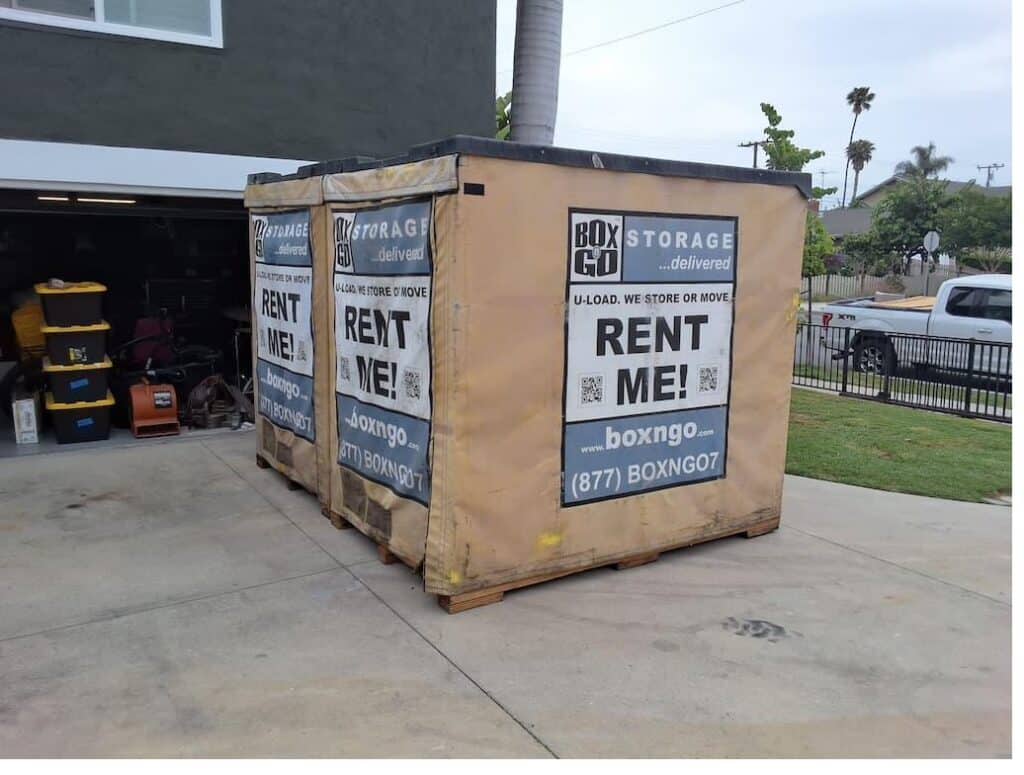
In the mid-1980s, a few operators started asking a different question: why does the customer have to drive to the storage? Why not bring the storage to the customer? That question gave birth to portable storage - a younger cousin to traditional self-storage, built from the start to fix the parts that didn't work.
Student storage is the newcomer. As more students lived in dorms and short-term apartments far from home, the storage industry quietly developed a niche around the academic calendar - pickup and delivery timed to summer break, instead of the open-ended, month-to-month model that worked for everyone else.
 We Deliver
 We Pick Up
 We Store/Move
Store on your driveway or inside our secure facility. Load/unload only once. Ground level access.
Growing pains of moving
A traditional move concentrates almost everything on one day. The crew shows up, the meter starts, and by evening you're surrounded by boxes you didn't have time to pack carefully. The specific issues:
- No time to sort or downsize. The single-day timeline forces you to move things you should have donated or thrown out - at your expense, on both ends.
- The hourly meter shapes how you pack. Quick packing produces overstuffed boxes, fragile items wrapped in newspaper, and the kind of "mystery damage" that shows up at the destination.
- Storage gaps mean three companies. If your old lease ends before the new place is ready, you're juggling movers, a self-storage facility, and movers again. Three contracts, three handoffs, three chances for something to go missing.
- Long-distance is a relay race. A move from LA to Boston usually means a local mover to load, a long-haul carrier to drive, and another local mover to unload. The "two to three week" delivery window has a way of stretching.
- Southern California geography doesn't help. Hillside roads, narrow alleys, low-clearance carports - sometimes the truck can't reach the house, and the crew shuttles by hand with the meter running. Sometimes the company just declines the job.

Self-storage has its own headaches
Traditional self-storage puts almost all the work on you. To get your stuff into a unit and back out again, you'll typically run into most of these:
- Two truck rentals. One in, one out. A few hundred dollars each, plus age rules, deposits, and insurance.
- You handle your belongings repeatedly. Each handling adds wear, tear, and cost. And two weekends gone.
- You'll probably pay for more space than you use. Estimating how much storage you need before you've packed is nearly impossible, and the staff at the counter is incentivized to upsell you. Most people end up renting a bigger unit than they actually fill - and paying for the empty portion every month.
- Hidden premiums. Insurance sold separately. Drive-up access charged extra when it should be standard. Climate control? Also a premium.
- Getting to your stuff is a chore. Long hallways, elevators that may or may not be working, narrow doorways, units stacked on upper floors that need a hand truck and a lot of patience. The "drive-up access" units that solve this usually come at a premium - if they're available at all.
- Rate creep. Your sign-up rate doesn't stay your rate. Increases land a few months in, again at the year mark, and on. Moving out to chase a better deal costs you two more truck rentals, so most people stay and absorb it.
- National call centers. When something goes wrong, the person on the phone has never been to your city, doesn't know the parking rules on your street, and is reading from a script.

Students get the worst of it
Most storage companies treat students like everyone else, which is the problem. Their situation isn't like everyone else's:
- The calendar doesn't fit. Students need storage for a summer or a semester away, lined up with the academic calendar. Traditional self-storage is built around open-ended month-to-month rentals.
- The window is brutal. Dorms close on a fixed date. Students get a narrow window to clear out, usually right after finals.
- The vehicles don't work. Most students don't have a car big enough for a mattress, a mini-fridge, and a year of stuff. Most are under 25, which means a young-driver surcharge at most rental companies and a flat no at some.
- Parents flying in is expensive. Flight, hotel, rental car, two days off work - families often spend more on the move-out coordination than on the actual storage.
- Shipping home isn't great either. Mattresses, desk chairs, and dorm fridges don't ship well or cheaply. A lot of students just throw things out and re-buy in the fall.

We work through student-specific issues on our student storage page, where the model is built around the academic calendar.
Storage

Storage
Moving
Help

Supplies
Where Box-n-Go fits in
The portable storage industry was the response to most of what's wrong with traditional self-storage and moving. Box-n-Go is one of the operators in that industry - we got started in spring 2006 in Southern California, and we're independently owned. Our founders' story, the team, the equipment that lets us deliver where most competitors can't, and the longer version of what makes us different all live on the Company page.
How we do it different
Here's what changes when the container comes to you instead of you going to it:
- No truck rental. Ever. The container comes to you; we pick it up when you're done. No counter, no deposit, no return.
- Pack at your pace. Days, evenings, a couple of weekends - whatever works. The container sits in your driveway until you're ready. No meter running, no crew watching the clock.
- Time to sort and downsize. Because you're not packing under a deadline, you can actually decide what's worth moving and what's not.
- Load once, unload once. Into the container, out of the container. The container does the rest of the moving - your hands are off your belongings between those two moments.
- Pay for what you use. Five container sizes to match what you actually have. Right-size to your stuff, not to what someone at a counter pushed on you.
- Indoor self-storage with better security. Once your container reaches our warehouse, it's stacked indoors among hundreds of others. Even getting past the gate, cameras, and alarms wouldn't help a thief - they'd need the equipment to move containers around. We haven't had a break-in since 2006.
- Climate-friendly storage, no premium. The warehouse is commercial-grade with thick concrete walls and an insulated roof. With hundreds of full containers inside, the thermal mass keeps temperatures steady - cool in summer, warm in winter. Standard, not extra.
- Drive-up access at no extra cost. Need to grab something? Make an appointment. We pull your container out and set it on the ground for you. No long hallways, no elevators, no climbing.
- One company for moves with a storage gap. Old place to our warehouse, warehouse to the new place - same contract, same container, same point of contact. No three-way logistics juggling.
- Equipment that fits where bigger trucks don't. Truck-mounted forklift for the Flex, remote-controlled walk-behind for the larger sizes. Hillside streets, narrow alleys, low-clearance carports - places traditional movers often turn down.
- A real local team on the phone. Local, not a national call center. The same people who answer the phone are the ones running the company.
The services we offer - portable self-storage, student storage, local moving, and nationwide moving - all run on this model. Each service has its own page where the booking and pricing details live.
Where you can enjoy Box-n-Go
We serve Southern California from our centrally located warehouse: Los Angeles County, Orange County, and parts of Ventura, San Bernardino, and Riverside counties. Within that area, we deliver to neighborhoods most other portable storage operators won't reach - hillside streets in the Westside and Pasadena, narrow alleys in older parts of LA, tight cul-de-sacs, low-clearance carports. Our delivery equipment is built for that.

Long-distance moves outside Southern California go through partner carriers, with Box-n-Go as your single point of contact. We're a BBB Accredited Business with an A+ rating, and a member of the California Self Storage Association.
Frequently Asked Questions
How is portable self-storage different from traditional self-storage?
Traditional self-storage means renting a truck, driving your stuff to a facility, unloading it into a unit, and reversing the whole sequence later. Two truck rentals, two trips, multiple handlings of every item. Portable self-storage flips it: the company brings the container to your driveway, you load it once at home, and the company picks it up and stores it indoors. No truck rental, no facility commute, fewer handlings.
What does a one-day move actually cost when you add everything up?
A typical local move with a traditional crew can run well into the thousands depending on size and distance, but the headline rate isn't the whole story. Add packing materials, a tip, a meal during the move, sometimes a hotel night if the new place isn't ready, and the cost of moving things you would have donated if you'd had time to sort. Long-distance is higher and adds a delivery window that can stretch from "two to three weeks" to two months. The deliver-pack-pickup model changes what you're paying for: the container and the transport, not an hourly crew standing in your living room.
Why hasn't traditional self-storage changed in fifty years?
The model is profitable, operators don't have strong pressure to innovate, and customer pain points don't show up on a quarterly earnings report. Rate creep, double-handling, truck rental costs - all things customers absorb and grumble about, not things that drive them away in numbers large enough to force change. Newer models have been growing for decades, but they're still a minority share. Change is happening; it's just slow.
Is portable self-storage right for everyone?
Honestly, no. If you've got a truck of your own, plenty of time, and a self-storage facility a few minutes from home, traditional self-storage probably works fine. Portable storage shines when one of those isn't true - when you'd rather not rent a truck, when the facility is forty minutes away, when you want to pack on your schedule instead of in one long weekend, or when you've got a storage gap during a move and don't want to coordinate three companies. Most people fall into the second category, but not all.
Why do students need a different storage model than everyone else?
Three reasons. The calendar - students need storage for a summer or a semester away, not month-to-month indefinitely. The timing - dorm move-out lands in a narrow window right after finals, when students don't have time to coordinate logistics and parents shouldn't have to fly in. The vehicles - most students don't have a car that fits a dorm room, and most aren't old enough to rent a full-size truck. A model built for the academic calendar with pickup-and-delivery service handles all three.
What does the storage industry mean by "the 4 D's"?
The 4 D's are the four most common reasons people end up needing self-storage: death (the contents of a parent's or relative's home after they pass away), divorce (one household becoming two), downsizing (moving from a bigger home to a smaller one, or clearing out a garage that's gotten away from you), and dislocation (a move, planned or otherwise). Most storage stays are tied to one of the four.
How does the portable storage industry handle hard-to-reach addresses?
It depends on the operator. Most use tilt-up bed trucks, which need a lot of room behind the vehicle to slide a container off - fine for flat suburban driveways, less fine for hillside streets, narrow alleys, or anywhere with overhead obstructions. Box-n-Go uses smaller equipment built for tight spots: a truck-mounted forklift for our Flex containers, and a remote-controlled walk-behind unit for the larger sizes. If you have an unusual situation, call us at (877) 269-6461 and describe it.
What areas does Box-n-Go serve?
The primary service area is Southern California: Los Angeles County, Orange County, and parts of Ventura, San Bernardino, and Riverside counties. Long-distance moves to other parts of the country are handled through partner carriers, with Box-n-Go as your single point of contact.

Want to learn more?
If you want to know more about who we are, the Company page covers the founders, the team, and what we stand for. Why Box-n-Go makes the case in plainer terms. The Compare page sets us side-by-side with the alternatives. The Reviews page has customer voices. For deeper structural detail on anything mentioned here - climate-friendly storage, ground-level access, the truck rental cost breakdown - see the Advantages knowledge base.
For booking and service-specific details, the services are self-storage, local moving, long-distance moving, student storage, and business and commercial storage. Or call us at (877) 269-6461.
