
Moving Glossary: Moving Terms & Definitions
New to moving? Most of the words you'll see on a moving quote or contract come down to a handful of ideas - and once those click, the rest of this glossary is easy to skim. Here are the ones worth knowing up front.
The big one is valuation, and it is not the same as insurance. Valuation is the level of responsibility the mover takes for your belongings if something is lost or damaged - you choose the level, from basic built-in coverage up to full-value protection. It is not an insurance policy. Knowing the difference is the single most useful thing you can learn before you sign.
Two more save people money and surprise. An estimate comes in types: a binding estimate locks the price, a non-binding estimate can change with the final weight, and a not-to-exceed price means you pay that amount or less, never more. And on a local move billed by the hour in California, double drive time means the drive between your two homes is counted twice - a state rule every local hourly mover must follow, not a fee one company adds.
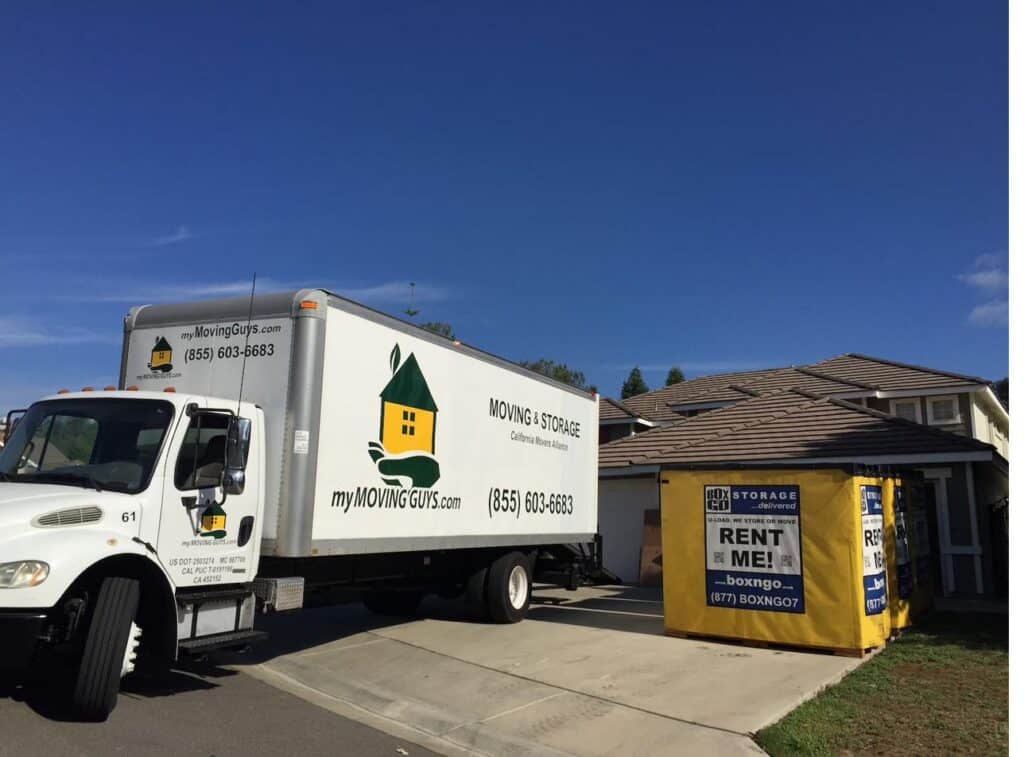
One more thing to know: a full-service move is when a crew does it all - packs, loads, drives, unloads. Box-n-Go arranges full-service moves through a licensed moving partner; Box-n-Go itself never performs the licensed moving work.
That's the core. Everything else is below, A-Z. Storing your belongings or using our containers? Those words live on the Storage glossary. Not sure about a term? Search it or tap a letter - and if you'd rather just ask, call us at 877-269-6461.
A
Accessorial (additional) services
Extra services on top of the basic load, drive, and unload - like packing, a shuttle truck, or carrying items up stairs. They are billed separately from the main move. These can come up on any move.
Advanced charges
When an outside company does part of the work, the mover pays that company first and then adds the cost to your bill. This can come up on any move.
Agent
A local moving company that handles part of your move for a larger national company (a van line). One agent might book the job, another might pack at your old home, and another might deliver at the new one. Agents are used on long-distance moves run through a van line.
Agreed delivery date
The day, or range of days, you and the mover agree your belongings will arrive. It is written into your paperwork. This applies to any move.
Agreed pickup date
The day, or range of days, you and the mover agree the crew will come to load your belongings. This applies to any move.
Appliance servicing
Getting an appliance like a washer, dryer, or refrigerator ready to move - disconnecting it before, and hooking it back up after. Some of this work has to be done by a licensed pro. This can come up on any move.
Assembly / disassembly
Taking furniture apart so it travels safely, then putting it back together after it arrives. This can come up on any move.
B
Bill of lading
The main document for your move. It is both your contract and your receipt, and it lists the services, your items, the terms, and the charges. The copy you sign at delivery is also your proof that everything arrived. Keep it. You'll get one on any move.
Binding estimate
A price quote that is locked in for the services and the load it lists. It will not change unless you add items or services later. You may be offered this on any move.
Booking agent
The local agent who sells you the move and registers it with the national company (the van line). They may or may not be the same agent who packs or delivers. You'll see this on a long-distance move run through a van line.
Bulky article (bulky item)
A large or awkward thing - like a piano, hot tub, or pool table - that takes special handling and can add a charge. This can come up on any move.
C
Carrier
The licensed company that actually transports your belongings. It is also just called the mover or moving company. Every move has one.
Cash on delivery (COD)
Paying for your move when it is delivered, instead of paying ahead of time. This can apply to any move.
Check-off (bingo) sheet
A numbered list used at delivery to check off each item as it comes off the truck, so you can confirm everything arrived. You'll mostly see this on a long-distance move, where items are numbered and tracked.
Claim
A written request for payment if something is lost or damaged during the move. You send it to the mover with proof. This can happen on any move.
Commercial shipper
A business shipping goods meant for sale, rather than a household moving its own belongings. This is a business move, not a typical home move.
Consignee
The person who is set to receive the shipment at the new address - usually you. This term shows up on long-distance moving paperwork.
Consignor
The person the belongings are picked up from at the start - usually you. This term shows up on long-distance moving paperwork.
Crating
Building a custom wooden box around a fragile or valuable item, like a marble top or large mirror, to protect it. This can come up on any move.
Cube
The amount of space your belongings fill, measured in cubic feet. It is used to estimate how much your shipment weighs. You'll see this on a long-distance move, where price is based on weight.
Cube sheet (table of measurements)
A worksheet that adds up the space (cubic feet) your belongings take up, used to estimate the weight and the size of truck needed. It is used to price a long-distance move.
CWT (hundredweight)
A way of pricing by each 100 pounds of weight. "CWT" means "per hundred pounds." This is how long-distance moves are often priced.
D
Delivery window
The range of days your delivery is expected to land in, used when an exact date is not set. You're most likely to see a window on a long-distance move, but it can apply to any move.
Department of Transportation (DOT)
The federal agency that oversees transportation and sets the rules movers must follow. It governs movers on any kind of move.
Destination agent
The local agent at your new town who handles the arrival and any services there. You'll see this on a long-distance move run through a van line.
Dispatcher
The person at the moving company who schedules the crews and trucks and keeps the move on time. Every move has one behind the scenes.
Double drive time
On a local move billed by the hour, the crew and the truck start at your old home and finish at your new one - so after the job they still have to drive back. Someone has to pay for that return trip. Instead of tracking the drive back, California law simply counts the drive time between your two homes twice and stops there. That way the movers are paid fairly for the hours they actually worked, and you get one simple, predictable charge instead of a return trip nobody was there to measure. Every local hourly mover follows it. This applies to local moves in California.
E
En route (in transit)
A way of saying your belongings are on the way - picked up but not yet delivered. This can be said on any move.
Estimate (quote)
The mover's expected price for your move, based on how much you are moving, how far, and which services you choose. You get one on any move.
Estimated weight
The mover's best guess at how much your shipment weighs, used to quote the price. Weight is used to price long-distance moves.
Expedited service
Paying extra to have your belongings delivered by a specific date. This comes up on long-distance moves, where delivery can otherwise take a range of days.
Extra stop (extra pickup / delivery)
An added pickup or drop-off beyond your two main addresses. Each extra stop usually adds a charge. This can come up on any move.
F
Federal Motor Carrier Safety Administration (FMCSA)
The federal office, part of the DOT, that regulates movers who cross state lines. It oversees long-distance (interstate) moves.
Flight charge (stair carry)
A fee for carrying items up or down stairs. It mainly comes up on a long-distance move, which is priced by weight. On a local move billed by the hour, that time is already counted in the hourly charge, so it is not a separate fee.
Fuel surcharge
A separate fee that rises and falls with the price of fuel, listed apart from the base charges. It can appear on any move.
Full-service move
A move where the crew does everything - packing, loading, driving, unloading, and unpacking. At Box-n-Go this is done by a licensed moving partner, never by Box-n-Go itself. It is offered for both local and long-distance moves.
Furniture blankets / pads
Thick padded covers that protect furniture and appliances - and your floors and walls - during the move. Used on any move.
G
Gross weight
The weight of the truck after your belongings are loaded - the truck plus your things. It is used to price long-distance moves, which are billed by weight.
H
Hauler (hauling agent)
The agent that owns the truck and drives your belongings from the old home to the new one. You'll see this on a long-distance move run through a van line.
Helper (laborer)
A crew member hired to load and unload. This can be part of any move.
High-value article (items of extraordinary value)
An item worth a lot for its weight - like jewelry, art, or collectibles. You usually have to list these separately so they are properly noted and protected. This applies to any move.
Hourly rates
Being billed by the hour for the crew and the truck. This is how local moves are usually priced.
Household goods
Your personal belongings from home - furniture, appliances, clothing, and everyday items. The term applies to any move.
I
In-home survey
A walk-through of your home, in person or by video, so the mover can see what you are moving and give an accurate price. Most common before a long-distance move, but it can be done for any move.
Interstate move
A move that crosses a state line. These moves are long-distance and are regulated by the FMCSA.
Intrastate move
A move that stays inside one state. It can be short or long, and is regulated by that state rather than the federal government.
Inventory
A numbered list of everything being moved, with the condition of each item noted. It is checked at pickup and again at delivery, and acts as a receipt. You'll get one on any move, and a detailed one on a long-distance move.
L
Line-haul charges
The base cost of moving your belongings from the old home to the new one, figured from the weight and the distance. This is the main charge on a long-distance move.
Loading
Carrying your belongings out and placing them in the truck or storage container, secured so they ride safely. Part of any move.
Local move
A move that stays nearby, usually within the same area. It is normally billed by the hour.
Long carry
A fee for carrying items a long way between the truck and your door. It mainly comes up on a long-distance move, which is priced by weight. On a local move billed by the hour, that time is already counted in the hourly charge.
Long-distance move
A move that travels far - across the region or across state lines. It is usually priced by weight and distance rather than by the hour.
M
Method of payment
How you are allowed to pay - which cards and other options are accepted. This can vary by service, and applies to any move.
Moving Countdown
A week-by-week plan for a move, from about 90 days out through moving day and after. It lays out what to do and when so nothing gets missed. See the Moving Countdown for the full timeline. This helps on any move, and is most useful for a long-distance one.
Moving Household Goods Within California (CPUC guide)
The official California Public Utilities Commission booklet for moves that stay inside California. It explains how to choose a licensed mover, how written estimates and the not-to-exceed price work, how to protect your belongings, and how to file a claim. Read it here: Important Information for Persons Moving Within California (PDF). This applies to local and other within-California moves.
N
Net weight
The weight of just your belongings - the loaded truck weight minus the empty truck weight. It is what a long-distance move is priced on.
Non-binding estimate
A best-guess price that can change based on the final weight or any added work. You may be offered this on any move; the weight part matters most on a long-distance move.
Not-to-exceed price
A quote where you pay that amount or less - never more - for the services it lists. You may be offered this on any move.
O
Order for service
The document that gives the mover permission to transport your belongings. It is sometimes called the shipping order. You'll sign one on any move.
Order number (registration number)
The tracking number for your move, printed on your paperwork. Used on any move.
Origin agent
The local agent at your old town who preps and packs the shipment and prepares the paperwork. You'll see this on a long-distance move run through a van line.
Overflow
The part of a load that does not fit and has to come on a second trip or truck. This can happen on any move.
P
Packed by carrier (PBC)
Boxes the moving crew packed. Because the crew packed them, the mover is responsible for how those boxes hold up. This can apply to any move.
Packed by owner (PBO)
Boxes you packed yourself. Because you packed them, a damage claim for those boxes is harder. This can apply to any move.
Packing
Getting your belongings ready to move - wrapping, boxing, and labeling them so they travel safely. Part of any move.
Packing supplies
The materials that protect your belongings - boxes, paper, bubble wrap, tape, and covers. Used on any move.
Peak season rates
Higher prices during the busiest moving months, usually late spring through summer. This can affect any move.
Pickup and delivery charges
The cost of getting your belongings to and from the truck or storage container at each end. This can apply to any move.
Prohibited items (non-allowables)
Things movers will not carry - like flammable liquids, perishable food, and other hazards. Check the full list before you pack. This applies to any move.
R
Ready to Move (FMCSA brochure)
A short federal brochure from the FMCSA for anyone planning an interstate (state-to-state) move. It is a quick before / moving day / delivery day checklist, with the questions to ask and how to confirm a mover is registered. Read it here: FMCSA Ready to Move brochure (PDF). This is for long-distance, state-to-state moves.
Reweigh
Weighing the shipment a second time, at your request, with the price adjusted to the new weight. This comes up on long-distance moves, which are priced by weight.
S
Scale ticket (weight certificate)
The official slip showing the truck's weight empty and full, used to figure a weight-based bill. You can ask to see it. This is part of a long-distance move.
Shipment
Your belongings treated as one load being moved. The term is used on any move, most often on long-distance paperwork.
Shipper
The person whose belongings are being moved, or who is paying for the move - usually you. The term applies to any move.
Short haul
A move of medium distance - farther than a local move but not all the way across the country. It is still priced more like a long-distance move.
Shuttle service
A smaller truck used to reach your door when the big moving truck cannot get close. It can add a charge. It comes up most on long-distance moves with large trucks.
Storage-in-transit (SIT)
Holding your belongings in storage for a short time between pickup and final delivery - handy when your new place is not ready yet. This can be part of a local or long-distance move.
Stretch / shrink wrap
Clingy plastic film used to protect furniture and hold padding in place. Used on any move.
T
Tare weight
The weight of the empty truck before your belongings are loaded. It is subtracted from the full weight to find the weight of your things. This is part of pricing a long-distance move.
Transit time
How long it takes from pickup to delivery. This matters most on a long-distance move, where it can span several days.
U
Unpacking
Taking your belongings out of their boxes at the new home and clearing away the packing materials. This can be part of any move.
V
Valuation
The level of responsibility the mover takes for your belongings if something is lost or damaged - this is not insurance. You choose the level, from basic built-in coverage up to full-value protection. This applies to any move.
Van line
A large national moving company that runs moves through a network of local agents. Van lines handle long-distance moves.
Van operator (van foreman)
The driver in charge of loading, driving, and unloading your belongings. You'll see this role on a long-distance move.
Y
Your Rights and Responsibilities When You Move
A government booklet that explains your rights and the mover's duties - about estimates, the bill of lading, your liability and coverage options, and how claims and disputes work. Movers must give it to certain customers, mainly on long-distance moves. Read it here: Your Rights and Responsibilities When You Move (PDF).
See also
Storing your belongings or using our containers? Those terms live in the Storage glossary; student-specific terms live in the Student Storage Terms glossary.
Frequently asked questions
Is valuation the same as insurance?
No. Valuation is the level of responsibility the mover takes for your belongings if something is lost or damaged during the move - you choose the level, from basic built-in coverage up to full-value protection. It is not an insurance policy. Your own homeowner's or renter's insurance is separate, and it is worth checking what it already covers during a move.
What's the difference between a binding and a non-binding estimate?
A binding estimate locks the price for the services and load it lists, so it will not change unless you add items or work. A non-binding estimate is a best guess that can change based on the final weight or any added work. A not-to-exceed price is a third option, where you pay that amount or less but never more. On a long-distance move the weight is what moves the number, so the estimate type matters most there.
Do I pay by weight or by the hour?
It depends on the move. Local moves are usually billed by the hour for the crew and the truck. Long-distance moves are usually billed by weight and distance. On a local hourly move in California, the drive time between your old and new home is counted twice - a state rule called double drive time that every local hourly mover follows.
Does Box-n-Go do the full-service move itself?
No. A full-service move - where a crew packs, loads, drives, and unloads - is licensed moving work that Box-n-Go does not perform itself. It is handled by a licensed moving partner (My Moving Guys locally, partner carriers long-distance). Box-n-Go arranges it, but the licensed carrier does the move.
Where do I find the storage and container terms?
This page covers moving words. Terms about storage, containers, and self-service - like portable storage, on-site versus facility storage, redelivery, and warehouse handling - live on the Storage glossary. Student-specific terms are on the Student Storage Terms glossary.
GET A CUSTOM QUOTE
These are the terms. The service behind them is described on our moving services page, with Box-n-Go for movers covering full-service and move-with-storage jobs, and how Box-n-Go compares setting it against the other ways to move.
