
Storage Terms: A Plain-Language Glossary
New to storage and moving? Most of it comes down to a handful of words - and once those click, the rest of this glossary is easy to skim. Here are the ones worth knowing up front.
The big one is the difference between self storage and portable storage. Traditional self storage means renting a unit at a building and hauling your things there yourself. Box-n-Go is portable storage: we bring the container to you, you load it on your own schedule, and we pick it up - there's no unit to rent and no trip to make. You can keep that container at your place (on-site storage) or have us hold it at our indoor warehouse (facility storage), where you can reach it by appointment.
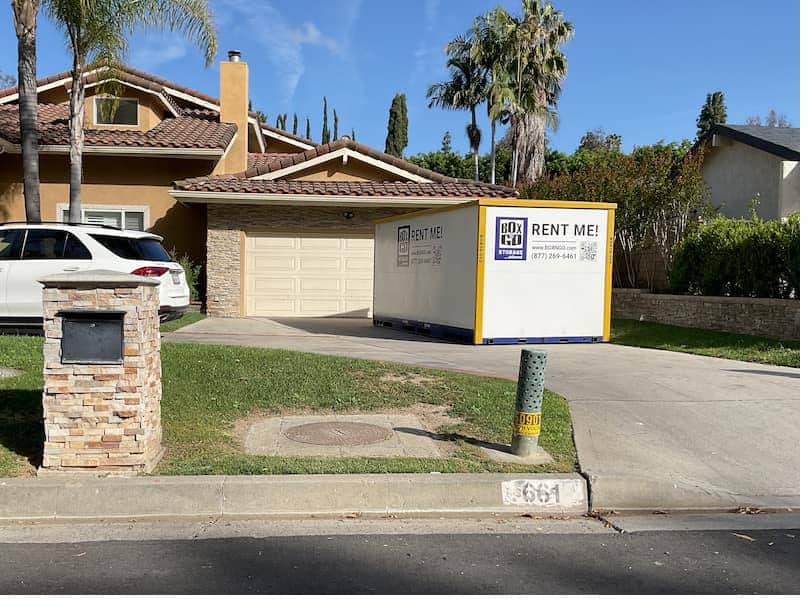
Not sure what size you need? That's what Box-n-Go Flex is for. Flex is the modular alternative to any size - order up to four per delivery, load what you actually have, and pay only for the containers you use.
Two money words trip people up. Proration means paying for part of a month instead of the whole thing - after a one-month minimum, Box-n-Go prorates container rent by the day. And a protection plan is not the same as insurance: insurance is a licensed, regulated policy, while a protection plan is a coverage option we offer on your stored goods (every facility-stored container starts with a baseline level of coverage built in).
A couple more you'll meet: a lien sale - sometimes called a storage auction - is what can eventually happen to anyone's stored goods if the bill goes unpaid and unresolved. It's rare, governed by law, and we always reach out first. And prohibited items are the short list of things that can't go in any container - liquids, flammables, perishables, and hazardous goods - there for everyone's safety.
That's the core. Everything else is below, A-Z. Not sure about a word? Search it or tap a letter - and if you'd rather just ask, call us at 877-269-6461.
A
Abandonment
Property can be treated as given up when a container is left without a padlock, or when belongings are left in or around a unit after final pickup. The why it matters: always keep a padlock on, and clear the unit at the end.
Access
Getting to your stored belongings. At Box-n-Go this is by appointment, free, and at ground level: you book a time, we bring your container out of the warehouse to you, and you reach it at floor height - no ramps, stairs, or self-entry. On-site, your container is right at your place whenever you want it. (See the Access page for scheduling.)
Access control
Any system - codes, cards, gates - that limits who can enter a facility. Box-n-Go's version is simpler and stricter: there's no customer entry to control, because the public doesn't go into the warehouse at all; staff bring your container out to you by appointment. The why it's stronger: a code or card still lets approved people roam the building, while no public entry means no one but staff is ever near the stored containers.
Access hours
The hours during which you can access your storage. With Box-n-Go, you access your container by appointment, so your access hours are the scheduling windows we offer. (See the Access page for current hours.)
Actual cash value
The basis for what a covered claim pays: what an item is worth at the time of loss, taking age and wear into account, rather than the cost of buying it new.
Administration / registration fee
A one-time setup or registration charge at sign-up, common across storage. The why it matters: it's a normal start-of-account item.
B
Broom-clean
The condition an empty container must be returned in: swept out and free of debris, so no cleaning charge applies.
Business (commercial) storage
Storage used by a company for inventory, equipment, records, or samples. Box-n-Go handles business storage with the same container model - delivered to your location, then kept on-site or at the warehouse. The why for a business: you can't easily pause operations to haul inventory across town, so a container that comes to you and is stored or returned on your schedule fits the way a business actually runs.
C
Camper / trailer storage
Outdoor or covered spaces sized for campers, travel trailers, and utility trailers. Box-n-Go doesn't offer camper or trailer storage - our containers are for packed household and business goods.
Cancellation / rescheduling
Changing or calling off a scheduled delivery, pickup, or access appointment. There's a cutoff the business day before; after that, a fee may apply. Changes are handled by phone.
Cart / dolly / hand truck
Wheeled aids that make it easier to move heavy or stacked items - especially when your belongings start a distance from the container, like across a yard, down a driveway, up from a parked car, or out of an apartment or office. Box-n-Go rents a hand truck, an appliance truck, and quilted moving blankets, and you return them when you're done. (See the Supplies page.)
CCTV (video surveillance)
Security cameras that monitor and record activity around a property. Box-n-Go's warehouse is watched by cameras, along with motion sensors, perimeter alarms, and on-site staff. But the bigger point is who can get near your belongings in the first place: a camera only watches a space people already walk through. At a traditional facility your unit sits off a public hallway any tenant can enter; with Box-n-Go, customers don't enter the warehouse - your container is brought out to ground level by appointment, so no stranger is ever inside with your things. Since opening in 2006, the warehouse has had no break-ins.
Climate-controlled storage
A space kept within a managed temperature and humidity range to protect sensitive items; the exact range varies, so ask what's actually controlled. Box-n-Go takes a different route: instead of a refrigerated, air-conditioned unit, its storage containers are built for airflow and kept in a steady indoor warehouse - metal containers are vented along the upper walls and carry a moisture-resisting roof coating. The why this works: the real problem climate control addresses is stagnant, damp air, and airflow through a breathable container in a steady indoor space addresses that without a refrigerated room. (As with any storage, pack items clean and dry.)
Climate-friendly storage
Box-n-Go's alternative to climate-controlled storage. Climate-controlled storage uses mechanical heating, cooling, and often dehumidification to hold a unit within a set temperature and humidity range - you're paying to run equipment that keeps the air conditioned. Climate-friendly storage reaches the same goal - keeping everyday belongings in the condition you packed them - a different way: the containers are built to breathe, so air moves through rather than getting trapped. Box-n-Go's wood-framed containers breathe naturally, and the metal S-XL containers are vented along the upper walls and carry a moisture-resisting roof coating; kept inside our steady indoor warehouse, that airflow manages everyday temperature swings and damp without a refrigerated room. The why it works: the real problem climate control solves is stagnant, damp air, and steady air movement in a steady indoor space handles that for most household and business goods. (As with any storage, pack items clean and dry.)
Collectibles storage
Storage for collections - books, records, memorabilia, household collectibles kept in boxes or bins. With Box-n-Go they stay in your own padlocked container that the public never reaches, brought out only for you. The why it fits: collections are about both value and order, and a private container only you access keeps them together and undisturbed. (For climate-sensitive fine art, see Fine art storage - a service we don't offer.)
Container moving
The self-service move: you load a Box-n-Go container, we transport it - local on our own trucks, or long-distance to major metros via third-party carriers. The why it matters: one container, you load once, no transfer points.
Container sizes (Flex / S / M / L / XL)
Box-n-Go's container lineup: the modular Flex plus four fixed sizes - S, M, L, and XL. The why there's a range: different jobs need different room, so you match the container to the load (or order multiple Flex containers) rather than forcing your things into one fixed footprint. Each fixed size has its own entry; see the Containers page for full capacities and the calculator to estimate what you need.
Contents (tenant) insurance
Coverage on the items you're storing, typically carried by the tenant. At Box-n-Go the comparable thing isn't insurance - it's the optional Contents Protection Plan - while the actual insurance in the picture is your own homeowner's or renter's policy. The why it matters: ours is a protection plan you choose, not insurance.
Contents Protection (Plan)
Box-n-Go's optional coverage for the belongings inside a stored container. When elected, it replaces the baseline Limited Warranty with the coverage limit you choose. It's a protection plan, not insurance, and it's offered, not required. For a container kept at your property, the equivalent is the On-Site Damage Waiver, which covers the container itself - not the contents.
Covered storage
An open space with a roof or canopy overhead. It cuts sun and rain but may be open on the sides, so it isn't full enclosure. Box-n-Go's warehouse storage is fully enclosed indoors rather than merely covered - the why being that open sides still let in blown rain, dust, and pests that full enclosure keeps out.
Custody / risk of loss
Who is responsible for the container and goods at a given moment. Box-n-Go's responsibility runs from when it picks up your loaded container to when it sets it down at your location; while the container sits on your property, it's in your care. Risk passes to you the moment the container is placed. The why it matters: on-site time is your responsibility.
Customer-owned lock
A lock you supply yourself, so you hold the only key. One thing to know: even with your own lock, access can be blocked if the account falls into default - that's standard across storage, which is why keeping the account current matters.
D
Declared Value
The value you state your stored goods are worth - not coverage by itself. By default you're treated as having chosen not to cover that value, so the company's responsibility stays at the baseline Limited Warranty unless you add a Contents Protection Plan. The why it matters: declaring a value doesn't protect it; a Contents Protection Plan is what raises the limit to match.
Default
Falling behind on payment, or otherwise not meeting the agreement. Default on one container can count as default on all. The why it matters: it's the trigger - access can be restricted and the lien process can begin.
Delivery (drop-off)
When we bring a container to your address and place it where you want it. It can be empty - dropped off for you to load - or full, when we bring a stored or loaded container to you (see Redelivery and Return). The why it matters: the container comes to your door either way, so there's no truck to rent and no trip to make.
Delivery clearance
The space Box-n-Go needs to set a container down: about 8.5 feet wide by 8.5 feet tall, plus room for the truck. Many competitors need far more - roughly 12 feet wide by 15 feet tall. The why this matters: a smaller clearance means a Box-n-Go container fits places a larger truck-and-trailer can't - tighter driveways, side yards, and narrower streets - so more homes qualify and there's less to arrange before delivery day.
Deposit (initial charges)
Initial charges collected up front can include a deposit along with transportation and the first month. The why it matters: it's part of what's due at the start, before recurring billing begins.
Disc lock
A thick, round padlock with little of the shackle exposed - a high-security style many customers choose for a container kept on their own property, where they decide what's sufficient. For a container stored at the Box-n-Go facility, the building's own security does the heavy lifting, so a standard high-security padlock is enough. (See Getting Started.)
Document (archive) storage
Secure storage for business or personal records, often climate-managed to protect paper. At a traditional facility, records sit in a unit off a public hallway - and break-ins are a real, recurring risk there. Box-n-Go removes most of that exposure: the public never enters the warehouse, your records stay in your own padlocked container, and it comes out only for you, by appointment. Since opening in 2006 the warehouse has had no break-ins. The why this matters for records: far less exposure means a much stronger chain of custody - exactly the physical control sensitive business and personal records are expected to have.
Door-to-door
Service from your old address straight to your new one, with the container doing the traveling. The why it helps: you load once at the old place and unload once at the new one - your belongings aren't shifted between a truck and a unit along the way.
Downsizing (retirement) storage
Storage for the belongings that don't fit when you move to a smaller home - common with retirement or an empty nest. Box-n-Go's container lets you sort a lifetime of things at home over days, keep what's coming with you, and store or pass on the rest, all without a rushed single-day move. The why it fits: downsizing is as much sorting as moving, and loading at your own pace at home is what that sorting actually needs.
Drive-up access
Being able to pull a vehicle right to a self-storage unit's door - handy, but at a traditional facility it's often a premium spot. Box-n-Go's equivalent is built in: ground-level loading right at the container, wherever it's delivered (see Ground-level loading). The why it matters: you get drive-up convenience without paying extra for a particular unit location.
Drive-up unit
A ground-level unit you can pull a vehicle right up to, which makes loading easy - at a traditional facility it's often a paid upgrade. With Box-n-Go, ground-level access isn't an upgrade, it's how every container works: your container is delivered at ground level and, in the warehouse, brought out to ground level for you. The why it matters: loading and unloading at ground level means no ramps, stairs, or elevators - safer and easier on both you and your belongings.
E
Enclosed storage
A fully closed, private space - more weather and privacy protection than a covered or open spot. A Box-n-Go container is enclosed and closed under your own padlock; in the warehouse it also sits inside a fully enclosed building - so your goods are enclosed twice over, by the container and by the building around it.
F
Facility storage
We pick up your loaded container and keep it at our secure indoor warehouse; you reach it by appointment. The warehouse is monitored by security cameras, motion sensors, perimeter alarms, and on-site staff - but the structural difference is that customers don't enter it: your container is brought out to ground level when you visit, so there are no shared hallways and no public access to the interior. Since opening in 2006, the warehouse has had no break-ins. The why people choose facility over on-site: when there's no room to keep a container on the property, or it'll be stored a while, the warehouse keeps it secured and out of the weather - and it's the structure itself, not just the cameras, that keeps it safe.
Fine art storage
Climate-managed, high-security storage designed for artwork and collectibles. Box-n-Go doesn't offer specialized fine-art storage - our containers suit general household and business items, not climate-sensitive artwork.
Fire suppression
Sprinklers, detectors, or alarms that respond to fire. Box-n-Go's warehouse has sprinklers, fire alarms, and regular inspections - a level of fire protection many storage operations don't maintain. The why it matters: an enclosed, monitored, sprinklered and inspected building is a more controlled environment for your container than an open lot or an unattended unit.
Flatbed cart
A free four-wheeled cart some facilities keep on hand for moving items to and from a unit. The same need shows up with Box-n-Go: your container sits at the curb, driveway, or lot, and your belongings may start a good distance away - across a yard, down a long driveway, up from a parked car, or out of an apartment or office. A hand truck or appliance truck handles that haul, and Box-n-Go rents both. (See Cart / dolly / hand truck and the Supplies page.)
Flex container (Flex storage container)
Box-n-Go's modular storage container, about 8 feet long by 5 feet wide - one Flex container holds roughly one to one-and-a-half rooms of household goods. It's called "Flex" because you flex the count to your load: order one to four per delivery at a flat rate and pay only for the containers you actually fill (as a rule of thumb, two Flex hold about as much as an S, three about an M, four about an L). The why it's useful: when you're unsure how much you'll have, you don't guess a size up front - you load what you have, pay for what you use, and any unused containers are picked up. (See the Containers page for full sizes and capacities, or the calculator to estimate what you'll need.)
Force majeure
Events beyond anyone's control - storms, disasters, road closures, government actions - that can delay or pause service.
Foreclosure (lien) sale
A public auction of stored property to recover unpaid charges, held only after notice and a required waiting period. The why it matters: it's the last step; the full process and your rights are covered in the Storage Auctions guide.
Freight elevator
A large elevator for moving belongings between floors. Not needed with Box-n-Go - everything happens at ground level, so there's no elevator to wait for or share.
Full Service moving
A move where a crew packs, loads, drives, and unloads - a crew-and-truck move, not containers. This is licensed household-goods carrier work Box-n-Go doesn't perform itself; it's fulfilled by a partner mover (My Moving Guys locally; partner carriers long-distance). The why it matters: "we handle all of it," arranged through a licensed partner.
G
Gate, gate code, keypad & access card
The entry barrier and credentials a traditional self-storage facility uses to control who gets in - a gate (sometimes automatic), opened with a personal code or PIN at a keypad, or a swipe card. Box-n-Go has none of this for customers: the warehouse isn't self-entry, so there's no gate to drive through and no code, PIN, or card to manage, carry, or have stop working when you arrive. Staff bring your container out to you by appointment. The why that's stronger: a gate or code only filters who gets onto the lot, while no public entry at all means no one but staff is ever near the stored containers.
Goods-in-transit coverage
Protection for belongings while they're being moved, as opposed to while they sit in storage. For a container shipped beyond the standard service area, in-transit protection is a specific coverage you can purchase for that leg. The why it matters: storage coverage and in-transit coverage are two different moments - a long-distance shipment is the time to ask about the transit piece.
Ground-floor vs upper-floor unit
Whether your unit is at street level or on a higher floor (which can mean stairs or an elevator and a longer carry). Every Box-n-Go container is loaded and accessed at ground level, so there's no upper floor to reach. The why: an upper-floor unit can turn a simple load into a stairwell or elevator job - ground level every time removes that.
Ground-level loading
Box-n-Go containers sit on the ground, so you load and unload at floor height - no ramp, no lift, no climbing. The why it matters: loading at ground level is safer and easier on you and your belongings than carrying up a truck ramp or through an upper-floor unit, and with Box-n-Go it's standard, not an upgrade.
H
Heated storage
Storage kept warmer than the outdoors in cold weather. Not the same as full climate control; humidity and cooling may not be included. Box-n-Go doesn't offer dedicated heated storage - the indoor warehouse simply stays moderate year-round in Southern California's mild climate, so dedicated heating isn't needed here.
Homeowner's / renter's insurance
Your existing home policy may already extend to belongings in storage - worth checking before buying more. Box-n-Go's protection plan is secondary to your own insurance: if your policy covers a loss, that comes first, and the plan addresses what falls under your deductible. The why it matters: the two are layered, not either/or.
I
Individually alarmed unit
A unit with its own alarm that trips if it's opened without authorization - a per-unit feature at some traditional facilities. Box-n-Go protects differently: the whole building is covered by motion sensors and perimeter alarms, and your container is closed with a three-point latch and your own padlock, inside a warehouse the public can't enter. The why: instead of one alarm on one unit, the protection wraps the entire building your container sits in.
Indoor vs outdoor storage
Indoor units sit inside a building (more weather separation, sometimes more carrying); outdoor or drive-up units are reached from outside (easier loading, less weather separation). Box-n-Go lets you have it both ways: the same container can sit outdoors on your property or move indoors to the warehouse - and either way you load it at ground level, not up a ramp or down a hallway. The why that helps: your needs change, so being able to keep it handy now and move it indoors later, with the same container, means you don't have to choose once and live with it.
Insurance requirement
You're asked to insure or self-insure your goods - standard for storage - and Box-n-Go offers a Contents Protection Plan as one way to do that, alongside the baseline Limited Warranty. The why it matters: you decide how to cover your goods, with the plan as one option.
Interior (hallway) unit
A unit reached through an indoor hallway, usually with more weather protection than a drive-up space - but also a shared corridor you carry everything down. Box-n-Go has no hallways: your container comes to you, or is brought out of the warehouse to ground level. The why: a hallway means carrying past other tenants' units and sharing the route in, and a container removes both the long carry and the shared access.
Inventory (your list)
Your own list or photos of what you've stored. Box-n-Go's printable Loading Form has a page-two inventory list - fill it in as you load (see the Loading page). Keeping an itemized record, with photos or video of goods as packed, is smart. The why it matters: an easy record of what went in, especially before a long-distance move.
Inventory storage
Storage for a business's stock, products, or samples - overflow inventory, seasonal product, or goods between locations. Box-n-Go brings the container to your business, you load it on your schedule, and it's kept on-site or at the warehouse and returned when you need the stock back. The why it fits: a business can't easily pause to haul inventory across town, so storage that comes to the door and returns on schedule works with operations instead of interrupting them. (See also Business storage.)
Irreplaceable / high-value items
Items whose value is hard to set or that can't be replaced - heirlooms, fine art, irreplaceable documents, large amounts of cash or jewelry - aren't suited to storage and are treated as prohibited. The why it matters: the facility isn't the right place for things that can't be valued or replaced.
L
L container (Large)
A fixed-size container about 16 feet long by 8 feet wide - roughly a two- to three-bedroom home or three to five rooms. Available for on-site storage, warehouse storage, and local moves. The why it's a common residential choice: it covers most whole-home loads in one container and can also carry a local move. (See the Containers page.)
Lien
A legal claim Box-n-Go can place on stored property for unpaid rent and charges, allowing the property to be sold to recover what's owed. The why it matters: keeping the account current is what keeps your belongings yours - the full process is in the Storage Auctions guide.
Limited cargo liability
For long-distance shipping, the outside carrier's built-in responsibility for your goods is very limited, because you load the container yourself and Box-n-Go isn't a household-goods carrier. The why it matters: it's the reason in-transit protection is worth considering on a long move.
Limited liability / care, custody & control
The limited responsibility Box-n-Go takes for goods in its care - the reason coverage options exist in the first place. The binding terms are set in your rental agreement. The why it matters: it's why a protection plan is worth considering.
Limited Warranty
The baseline limit on how much Box-n-Go can be responsible for if goods are lost or damaged in its care - a set amount per container, based on actual cash value, and not combined across containers. It's the default that applies unless you elect a Contents Protection Plan. The why it matters: it's the floor; the Contents Protection Plan is how you raise it.
Liquids
Liquids of any kind are not allowed in your storage container, sealed or not. That includes anything that can turn into liquid while stored - an un-defrosted refrigerator, a portable air conditioner, a swamp cooler. A leak ruins your own belongings and can spread to a neighbor's, which is your responsibility. The why it matters: use them up, give them away, or take them with you before storing.
Loading bay / dock
A spot at a facility set aside for loading and unloading. Box-n-Go loads at your container on the ground, not at a shared facility dock - the why being that loading right where the container sits avoids hauling things across a building.
Loading help (Simply Load / Pro Load / Hourly Load)
An add-on where a crew loads the container you've ordered - not a move. Simply Load: the crew loads what you've packed and prepped. Pro Load: adds disassembly and blanket-wrap protection. Hourly Load: the by-the-hour option. The why it matters: it's labor on your container, distinct from full-service moving.
Local vs long-distance
Whether your move stays nearby or travels a longer distance, which changes pricing and timing. Box-n-Go runs local moves on its own trucks. For long-distance there's more than one route: we can ship your loaded Flex container, or a partner-network full-service mover can pick up at our warehouse and deliver to the destination - the right option depends on where you're going and how much you're moving.
Lock (your own / padlock)
You secure your container with your own padlock, and you hold the only key - one lock per container. How much lock you need depends on where the container is. For facility storage, the building is the security - cameras, alarms, inspections, no public access - so a standard high-security padlock with a hardened shackle is plenty. For on-site storage at your own property, the container isn't behind the facility's protection, so customers secure it with whatever they find sufficient, often a heavier lock such as a disc lock. (See Getting Started for the padlock we point most customers to.)
Locker (locker unit)
A small storage space, good for boxes, documents, or seasonal odds and ends. Box-n-Go doesn't rent lockers; the closest equivalent is a single Flex container, which still comes to your door rather than sitting in a building you visit.
Long-term storage
Storage kept about six months or more. Worth asking about longer-term discounts or prepay options. With Box-n-Go, your monthly rate is held for the first twelve months. The why that matters: the biggest worry with a long stay is rent creeping up the longer you're there - holding your rate for the first year takes that off the table.
M
M container (Medium)
A fixed-size container about 12 feet long by 8 feet wide - roughly a two-bedroom home or two to four rooms. Available for on-site or warehouse storage. The why: a single mid-size container for a clear, moderate load, instead of juggling several Flex containers. (See the Containers page.)
Metal container / wood container
The two builds Box-n-Go uses; we name the material when it matters, and otherwise "storage container" covers both. The why the build matters: the wood-framed containers breathe naturally, and the metal containers are vented along the upper walls with a moisture-resisting roof coating - both are made to let air move rather than trap it. (As with any storage, pack items clean and dry.)
Mezzanine
A partial mid-level floor inside a multi-story storage building. It's a traditional-facility feature; Box-n-Go's container model is single-level and ground-based, so there's no mezzanine to navigate.
Military storage
Storage timed around a service member's PCS move or deployment, when belongings need to be kept - sometimes for months - while you relocate or serve away. Box-n-Go delivers a container, you load on your own schedule, and it's stored locally or shipped to the new duty station. The why it fits: military timelines are rigid and often long-distance, so a container that handles both the storage and the move - without you orchestrating a separate truck and unit from afar - removes a lot of the moving-part risk.
Mini storage (mini-warehouse)
An older name for self storage: rows of small, individually locked units - you'll still see it on some signs and agreements. Box-n-Go works differently: rather than a row of walk-in units along a shared hallway, your storage container is delivered to you, closed under your own padlock, and brought out to ground level only when you need it. The why: a row of walk-in units means shared hallways and strangers nearby, so keeping your container closed and private until you ask for it is simply more secure.
Minimum stay (one-month minimum)
The shortest period you're billed for. The minimum rental period is one calendar month on month-to-month (or your selected term). The why it matters: short needs still start at one month.
Month-to-month
Pay monthly with no long lease - Box-n-Go's standard arrangement, with a one-month minimum. The why it matters: no long commitment beyond the first month.
Monthly Anniversary Date
The day each month your recurring rent is due - your delivery day, not the calendar first. Billing is automatic to the card on file unless you request invoices. The why it matters: it tells you exactly when your monthly charge falls.
Motion-sensor lighting
Lights that switch on when they detect movement, a common deterrent at storage lots. Box-n-Go's warehouse goes past lighting - it uses motion sensors as a security layer, so movement inside is detected, not just lit, alongside cameras, perimeter alarms, and on-site staff.
Move-In Date
The day your container is first delivered, placed, or made available to you. It's when your storage starts and when your rate-hold period begins. The why it matters: it's the clock-start for both your service and your locked rate.
Moving storage (storage during a move)
Storage that bridges the gap when your move-out and move-in dates don't line up. With Box-n-Go the same container that holds your things during the gap is the one that moves them - so there's no separate storage unit, no second truck, and no repacking between storing and moving. The why it fits: a date gap is the most common moving headache, and one container covering both the storage and the move removes the double cost and the double handling.
N
Non-climate (ambient) storage
Standard storage that isn't temperature-managed; it follows the seasons. Fine for many durable items. Box-n-Go's indoor warehouse is steadier than open-air ambient storage - rarely warmer than the mid-70s - though it isn't mechanically climate-controlled. The why this is usually enough: most household and business goods don't need refrigeration, just shelter from weather swings and damp.
O
Office hours
When staff are reachable - not always the same as access hours. With Box-n-Go, the phone line and online booking are separate from when your container can be brought out, so check both when you plan a visit.
Office storage
Storage for office furniture, equipment, files, and supplies during a move, downsizing, or remodel of a workspace. Box-n-Go brings the container to the office, you load on your timeline, and it's kept on-site or at the warehouse. The why it fits: clearing an office usually can't stop the business, so a container at the door that you fill around the workday beats coordinating a truck and an offsite unit. (See also Business storage.)
On-Site (Property) Damage Waiver
Coverage for a container kept at your own property - driveway, business lot, job site. It covers Box-n-Go's container and equipment itself, not the contents, up to the limit you choose. Offered, not required. The why it matters: an on-site container is exposed differently than a facility-stored one, so it's a separate product.
On-site storage
Your loaded container stays right on your property - driveway, yard, or lot - so your things are a few steps away, and you hold the only padlock key. The why people choose on-site: during a remodel or a staged move you often need things close and reachable, so keeping the container on your property means access without a trip anywhere.
P
Packing supplies (materials)
Boxes, tape, wrap, covers, and padding used to protect items as you pack. Box-n-Go sells these (including Moving Kits) and rents equipment like hand trucks, appliance trucks, and quilted blankets - see the Supplies page. The why it matters: the right materials protect items through loading, storage, and any move.
Perimeter fencing
Fencing around a storage property to keep non-customers off the lot. Box-n-Go's belongings sit inside an enclosed warehouse rather than in an open, fenced yard - monitored with cameras, motion sensors, and perimeter alarms. The why it matters: a fence guards an open lot, while an enclosed, alarmed building keeps your container out of reach to begin with.
Personal storage
Storage rented by a household or individual for everyday belongings - furniture, seasonal items, boxes - often during a move, remodel, or downsizing. This is the most common reason people use Box-n-Go, and the why is simple: those situations all happen at your home, on your own timeline. The container comes to your door, you load it as you sort and pack over days rather than in one rushed trip, and it either stays on-site or goes to the warehouse - so there's no truck to rent and no driving carloads to a facility right when life is already busiest.
Pickup
When we collect your container - a loaded one to store or move, or an unused empty one (with Flex, you only pay for the containers you fill). You load on your own schedule and tell us when you're ready.
PODS
PODS - an abbreviation of Portable On Demand Storage and a registered trademark of PODS Enterprises, Inc. In everyday use, the generic words pod or pods are often used to describe almost any portable storage container - the kind delivered to your door for you to load, then stored or moved - and in that loose, dictionary sense it simply names the category. Box-n-Go Storage is not associated, sponsored, or affiliated with PODS Enterprises, Inc.
Portable (mobile) storage
A model where a storage container is delivered to you, you load it at your own pace, and the company picks it up to store or move - no trip to a facility to load. This is what Box-n-Go does, and it's where the advantages come from: the container comes to you, so there's no truck to rent and no driving; you load at ground level on your own schedule, so there are no ramps, stairs, or elevators and no rushed single-day move; your belongings aren't double-handled into and out of a unit, so there's less chance of damage; you pay only for the space you actually use; and the same container can stay on-site, go to the warehouse, or move to a new home without being repacked.
Prohibited Goods
The things that can't go in a container - among them hazardous, flammable, and perishable items; living things; valuables and irreplaceables such as cash, jewelry, fine art, and important documents; and anything that can leak or combust. The full list is on the Service Policies page - check it before you pack. The why it matters: these rules protect your belongings and your neighbors', since containers are stored close together.
Proration / pro-rated rent
Being charged only for the days you actually use instead of a full month. For example, if your rate were $100 a month and your container were collected on the 18th of a 30-day month, you'd be credited for the other 12 days: (12 ÷ 30) × $100 = $40 back. The why it matters: you don't pay for time you didn't use.
Q
Quote (estimate)
A price for your specific job, based on size, services, and distance. Container pricing is by zip and quoted at booking; full-move quotes are built for your situation. For a long-distance move, a quote is time-limited, so book while it's current. The why it matters: your real number comes from your address and what you're moving.
R
Rate guarantee / rate hold
Your monthly rate is held for a full year after your Move-In Date, instead of climbing the way promotional self-storage rates often do; after that it adjusts by a small set amount on each yearly anniversary. The why it matters: no surprise hike a few months in.
Redelivery (home access)
When your stored container is brought back to you so you can reach your belongings at home - which is why we also call it home access; we collect it again when you're done. In the rental agreement the word is broader: each time your container is opened, including a facility-access visit, counts as a redelivery. The why it's useful: instead of going to the warehouse, your own container comes to you.
Redemption
Your right to stop a sale by paying the account balance in full before the auction. The why it matters: paying in time stops the sale.
Regional terminal
On a long-distance container move, the hub at each end: your goods ship to a destination terminal, and a local provider then schedules final delivery to your address.
Regulated insurance vs protection plan
True insurance is a licensed, regulated policy from an insurer; a protection plan is a contractual option from the storage company, with its own limits and rules. Box-n-Go offers a Contents Protection Plan - expressly not a policy of insurance - and your own homeowner's or renter's policy is the regulated insurance. The why it matters: they work together, and you're never buying insurance from us.
Renovation (remodel) storage
Short-term storage for furniture and belongings cleared out of rooms during a remodel or repair. Box-n-Go drops a container at your home, you clear the rooms into it at your own pace, and it stays right there - or goes to the warehouse - until the work is done. The why it fits: a remodel is disruptive enough without hauling everything offsite, so keeping it in a container on the driveway means your things are clear of the work but still on hand.
Rent / rental rate
The recurring monthly charge for your storage - a flat rate per container, quoted by zip at booking, held steady through your rate-hold period. The why it matters: you know the number before you commit.
Reservation vs rental
A reservation holds your spot; a rental is the active agreement once you've booked and your container is on the way. The why it matters: it tells you when you're committed and the storage clock starts (see Move-In Date).
Resident (on-site) manager
A manager who lives on the property - common at small storage facilities, where someone on-site doubles as oversight after hours. Box-n-Go doesn't have a live-in manager, but several staff are at the warehouse during business hours, and your container is kept with no public access and brought out for you by appointment.
Return (final delivery)
The final delivery of your loaded container to its destination at the end of service - also called full delivery or final delivery ("final del"). The why it's worth naming on its own: a home-access redelivery is a temporary visit, while a return is the last delivery, where your things reach their end point and the container's job is done.
Right of repossession
For a container kept at your property, if it goes unpaid Box-n-Go may come retrieve its container. The why it matters: an on-site container left unpaid can be picked up to recover the equipment.
Roll-up vs swing door
Roll-up doors roll upward on tracks like a garage door; swing doors open outward on hinges. Box-n-Go containers use swing doors - a single door on Flex, double doors on the larger sizes - secured with three-point latches and your own padlock. The why it matters: swing doors have no track-and-spring mechanism to jam or fail and are harder to force than the roll-up doors common on traditional units, so the container is more robust and more secure.
S
S container (Small)
Box-n-Go's smallest fixed-size container, about 8 feet long by 8 feet wide - roughly a one- to two-bedroom home or two to three rooms. Available for on-site or warehouse (facility) storage. The why you'd choose it over Flex: when you have a clear, smaller volume and prefer one container to manage rather than several. (Full capacity on the Containers page.)
Seasonal storage
Storage for things you use only part of the year - patio furniture, holiday decorations, sports and camping gear, winter or summer clothing. With Box-n-Go, a container can sit on your property so seasonal items are reachable when the season turns, or be stored at the warehouse between uses. The why it fits: seasonal gear comes out and goes back on a rhythm, and a container you load at home spares you a trip to a facility each time the calendar flips.
Security
The mix of measures that protect stored belongings - cameras, monitoring, controlled entry, and so on. Box-n-Go's protection starts one step earlier than most: customers don't enter the warehouse at all, so the biggest risk at a traditional facility - strangers moving among the units - is removed. On top of that sit concrete layers: security cameras, motion sensors, perimeter alarms, on-site staff, a sprinkler system, three-point door latches, and your own padlock. The why it matters: most break-ins start with access, and since opening in 2006 the warehouse has had none.
Security features
A catch-all term for the protective measures a facility lists. Box-n-Go's are concrete: security cameras, motion sensors, perimeter alarms, on-site staff, a sprinkler system, three-point door latches, and your own padlock - all wrapped around a facility the public never enters. The why it matters: features are only as good as who's kept out, and no public access is the one that does the most work.
Self storage (self-service storage)
A model where you rent a private space at a storage building and bring, load, and manage your belongings yourself - you hold the key and come and go during access hours. Box-n-Go offers a portable version of the same idea: a storage container is delivered to your address, you load it on your own schedule, and you either keep it on-site or have it picked up for storage. At a traditional building you walk public hallways past other tenants' units; with Box-n-Go you load at home and, at the warehouse, your container is brought out to you, so no one else walks past your things. It's also less work - no truck to rent, no drive to a facility, and your belongings aren't double-handled into and back out of a unit. The why: the whole appeal of self storage is doing it yourself on your terms, and the portable model gives you that control without the hauling and the trips it normally costs.
Self-insure
Choosing to carry the risk on your stored goods yourself instead of buying coverage or a protection plan, which means you're responsible for any loss.
Self-storage insurance
A policy taken directly on stored belongings, sometimes through an outside insurer. You may insure with a third party or self-insure; Box-n-Go isn't an insurer and doesn't sell insurance - it offers a protection plan instead. The why it matters: it tells you our coverage is a plan, not a licensed policy.
Self-storage unit: 10×10
A roughly 10-by-10 footprint - about a one-bedroom apartment. Box-n-Go's rough equivalent is an S container, or about two Flex containers (two Flex hold about as much as an S). (See the S container entry and the Containers page.)
Self-storage unit: 10×15
A roughly 10-by-15 footprint - about two bedrooms' worth of furniture and boxes. Box-n-Go's rough equivalent is an M container, or about three Flex containers. (See the M container entry and the Containers page.)
Self-storage unit: 10×20
A roughly 10-by-20 footprint - about a small three-bedroom house. Box-n-Go's rough equivalent is an L container, or about four Flex containers. (See the L container entry and the Containers page.)
Self-storage unit: 10×30
A roughly 10-by-30 footprint - about a large four- to five-bedroom house. Box-n-Go's rough equivalent is an XL container (our largest, available on-site); a very large home may need more than one container. (See the XL container entry and the Containers page.)
Self-storage unit: 5×10
A roughly 5-by-10 footprint - about a walk-in closet or a small bedroom's worth: a mattress set, a dresser, and a stack of boxes. Box-n-Go's rough equivalent is about one Flex container. (See the Flex container entry and the Containers page.)
Self-storage unit: 5×5
A roughly 5-foot-by-5-foot self-storage footprint - about the size of a small closet; it holds boxes, a few small items, or seasonal odds and ends. Box-n-Go's closest equivalent is a single Flex container, which actually holds a bit more (roughly one to one-and-a-half rooms) and comes to your door instead of sitting in a building. (See the Flex container entry and the Containers page.)
Service area
Where Box-n-Go delivers and serves: Los Angeles and Orange counties, plus parts of Ventura, San Bernardino, and Riverside. The why to check it: delivery, pickup, and local moves depend on your address falling inside that footprint, so it's worth confirming yours up front. (Moves beyond it go through partner carriers - see Local vs long-distance.)
Service Commencement Date
The date your storage service begins - the same point as your Move-In Date: when the container is first delivered, placed, or made available to you. The why it matters: it's the start of your service and of the rate-hold period.
Shipping container (conex box)
A sealed steel cargo container repurposed for storage. Because a conex is sealed, it can trap moisture and let condensation form inside as temperatures swing. Box-n-Go's purpose-built storage containers are different - they're built for airflow, with wood-framed containers that breathe and metal containers vented along the upper walls, so air moves rather than getting trapped. (As with any storage, pack items clean and dry.)
Short-term storage
Storage for a shorter stretch, roughly under a year - common during a move, remodel, or home sale. Box-n-Go containers rent month-to-month. The why that helps: short-term needs rarely have a firm end date, so month-to-month means you stop paying when you're actually done, not when a contract says so.
Size guide / estimator / storage calculator
A tool that helps you pick the right amount of space for what you're storing. At Box-n-Go this is easier: with Flex you don't have to nail the size up front - order a few, load only what you need, and unused ones are picked up. The why it matters: the modular option removes the guess-the-size pressure.
Smart lock
A lock opened by phone or Bluetooth instead of a key. Box-n-Go uses a simple physical setup instead - your container closes with a three-point latch and your own padlock, and you hold the only key, with nothing to be remotely disabled or locked out of.
Standard unit
A common nickname for a basic drive-up self-storage unit. Box-n-Go's equivalent "standard" is simply a storage container at ground level - delivered to you rather than rented in a building.
Storage container (moving container)
The portable, weatherproof container Box-n-Go delivers to your address. "Storage container" is our standard name for it; the same container can stay on your property (on-site), move to our facility, or be shipped to a new home - the same container throughout, so your things aren't repacked or double-handled between stages. The why that matters: packing is the hard part, so packing once and leaving it packed means storing now and moving later doesn't make you redo the work.
Storage trailer
A storage container mounted on wheels so it can be towed; loaded at ground height. Box-n-Go delivers containers that are set down on the ground at your location rather than left on a trailer. The why: a grounded container is steadier to load and doesn't tie up a wheeled trailer parked at your home.
Storage unit (unit)
The individual, lockable space you rent inside a self-storage building; you hold the only key. Box-n-Go doesn't rent space in a building - you get your own storage container instead, delivered to you and closed under your own padlock. The why it's different: a unit is a fixed space in a shared building you travel to, while a container is dedicated to you and comes to your door, so "your unit" is something you keep at home or have stored, not a room down a shared hallway.
Storage-in-transit (SIT)
Temporary warehouse storage of a shipment partway through a move, until you're ready for delivery. (More in the Moving Terms glossary.) Box-n-Go's move-and-store does this inside your own padlocked container rather than repacking your things into warehouse vaults - so the load you stored is the load that arrives.
Street rate
The advertised new-customer rate a facility promotes to get you in - often a promo that rises later. Box-n-Go's model is the opposite: a transparent rate held for your rate-hold period. The why it matters: it's the bait-and-switch pattern our pricing avoids.
Student storage
Short-term storage timed around school breaks. Box-n-Go offers it too; the student-specific service names are defined in the Student Storage Terms glossary.
T
Temperature-controlled storage
A space where temperature is managed but humidity may not be. Often used loosely as a synonym for climate control - confirm which you're getting. Box-n-Go doesn't run a mechanically temperature-controlled unit; its approach is the breathable container in a steady indoor warehouse (see Climate-friendly storage).
Tenant
The term many storage agreements use for the renter. It's only a label - a storage unit or container is never a place to live.
Term plan (term contract)
A plan where you commit to a fixed length in exchange for a lower rate, with no increases during the term. At the end, the rate reverts to the then-current month-to-month rate. The why it matters: a better rate in exchange for committing to the term.
Third-party service provider
An outside company - for packing, moving, or loading - that Box-n-Go may refer you to. They work as your helper, not as Box-n-Go, and you arrange and pay them directly.
Transit time
The number of days a container spends in transport on a long-distance move. Worth asking about when you plan a long-distance timeline, since it affects when your things arrive.
U
Unit number
The ID assigned to your specific space; confirm it before you pay, move in, or report a problem. At Box-n-Go your container is tracked to you by its own ID at the warehouse - worth confirming the same way.
Unit size / unit mix
"Unit size" is the footprint of one space; "unit mix" is the range of sizes a facility offers. Box-n-Go works in containers rather than building footprints - the lineup runs Flex, S, M, L, and XL. The why it's framed differently: instead of renting a fixed room and paying for the whole footprint whether you fill it or not, you choose containers and pay only for the ones you load.
V
Valuation
For a long-distance or full-service move, the carrier's liability is set by valuation. See the Movers glossary for the full definition.
Vault (storage vault)
A wooden crate your belongings are packed into for warehouse storage, common in the moving-and-storage world. Box-n-Go's wood Flex container is similar - many people call it a vault - but it's built differently. A traditional moving vault is lighter, held together with klimps (metal clamps), and usually has no door, so it offers little security on its own. Your Flex is a sturdier, fully enclosed breathable container with a real door you close with your own padlock. Same idea - but the construction and the security aren't the same.
Vehicle storage (RV, boat, car, motorcycle)
Designated indoor, covered, or open-air spaces for storing vehicles that aren't in use; usually involves extra rules and preparation. Box-n-Go doesn't offer vehicle storage - our containers are built for packed household and business goods, not cars, RVs, or boats.
W
Walk-in unit
A unit entered on foot through a door or loading bay. With Box-n-Go you don't walk into a shared unit - you load your own container at ground level wherever it's delivered. The why: there's nothing to walk into or through; the space comes to you, open and at ground level.
Warehousing
Larger-scale or bulk storage space, often for businesses or oversized loads. When you choose facility storage with Box-n-Go, your container is warehoused in our own secure indoor building rather than parked in an open lot - the why being that an enclosed, monitored building protects goods from both weather and tampering in a way an open yard can't.
Weight limit / overweight
Each container size has a maximum load weight. Going over it can mean the container is refused for transport or has to be lightened, so load within the limit to avoid delays.
Wine storage
Temperature-managed units made to hold wine at a steady, cool temperature. Box-n-Go doesn't offer wine storage - our containers aren't refrigerated for that purpose.
X
XL container (Extra Large)
Box-n-Go's largest container, about 20 feet long by 8 feet wide - roughly the contents of a three- to four-bedroom home. Available for on-site storage only. The why that limit exists: at this size the container stays on your property rather than being warehoused, so it suits a large household keeping everything in one container at home. (Confirm fit and capacity on the Containers page.)
#
24/7 access
Round-the-clock entry to a unit, offered by some self-storage facilities. Box-n-Go facility access is by scheduled appointment rather than round-the-clock - but on-site, the container is at your place whenever you want it. The why behind the trade: the same no-self-entry rule that means you book a time is what keeps strangers out of the building.
See also
Moving-only terms (bill of lading, line haul, binding estimate) live in the Moving Terms glossary; student-specific terms live in the Student Storage Terms glossary.
Frequently asked questions
What's the difference between self storage and Box-n-Go's portable storage?
Traditional self storage means renting a unit at a building and hauling your belongings there yourself. Box-n-Go is portable storage: we deliver a storage container to your address, you load it on your own schedule, and we pick it up - there's no unit to rent and no trip to make. You can keep the loaded container at your place, or have us store it at our indoor warehouse, and either way you load and unload at ground level.
Can I keep the container at my home, or do you store it for me?
Either one. With on-site storage, your loaded container stays right on your property - driveway, yard, or lot - so your things are a few steps away and you hold the only padlock key. With facility storage, we pick up the container and keep it at our secure indoor warehouse, where you reach it by appointment. The same container can start on your property and move to the warehouse later if your needs change.
How much room do you need to deliver a container?
About 8.5 feet wide by 8.5 feet tall for the container itself, plus room for the truck to position it. That is far less than many competitors, who need roughly 12 feet wide by 15 feet tall - so a Box-n-Go container fits tighter driveways, side yards, and narrower streets, and more homes qualify with less to arrange before delivery day.
Is the storage climate-controlled?
Box-n-Go uses a climate-friendly approach instead of a refrigerated, air-conditioned unit. The storage containers are built to breathe - the wood-framed containers breathe naturally, and the metal containers are vented along the upper walls and carry a moisture-resisting roof coating - and they are kept in a steady indoor warehouse. That airflow in a steady indoor space handles everyday temperature swings and damp for most household and business goods. As with any storage, pack your items clean and dry.
What can't I put in a storage container?
Prohibited items include liquids of any kind, flammable or hazardous materials, perishables, living things, and valuables or irreplaceables such as cash, jewelry, fine art, and important documents. The full list is on the Service Policies page - check it before you pack. These rules protect your belongings and your neighbors', since containers are stored close together.
GET A CUSTOM QUOTE
For where our terms part company with the industry, see Box-n-Go compared with self-storage, and how Box-n-Go compares for the wider set of options.
